| |
 |
|
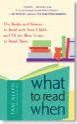
What to
Read
When
by
Pam
Allyn
(Penguin,
2009)
Pam
Allyn,
founder
of the
Westchester-based
LitLife
consortium,
provides
invaluable
annotated
lists of
tried-and-true
books
for
every
age and
every
pivotal
moment
in
childhood.
A
veteran
teacher,
Pam
makes a
compelling
case for
reading
aloud,
storytelling
and
other
literacy-building
family
rituals.
|
| |
 |
|
Raising
Lifelong
Learners,
Lucy
Calkins
and
Lydia
Bellino
(Da Capo
Press,
1998)
Lucy
Calkins,
co-founder
of the
Teachers
College
Reading
and
Writing
Project,
shows
parents
how to
nurture
curiosity
and
spark
creative
thinking
in
children
at home.
Having
an open
and
creative
approach
to
conversations,
chores,
and
games is
as
beneficial
as
reading,
writing,
and
math.
And even
in
traditional
skills
like
reading
and
writing,
we need
to
encourage
our
children
to read
for
meaning
and
write
for
expression,
rather
than
focus
only on
mechanics
like
phonics
and
spelling.
|
| |
 |
... |
Look
Who's
Learning
to Read,
Shelley
Harwayne
(Scholastic,
2009)
Shelley
Harwayne,
co-founder
of the
Teachers
College
Reading
and
Writing
Project
and
retired
NYC
schools
superintendent,
offers
wise and
practical
advice
for
parents,
grandparents,
babysitters,
nannies,
daycare
workers,
and
other
caregivers
on how
to
stimulate
students'
imagination.
The book
is
brimming
with
practical
everyday
activities
that
will
spark
children's
literacy
in
authentic,
joyful
ways.
|
| |
 |
|
The
Read-Aloud
Handbook,
Jim
Trelease
(Penguin,
2006)
This
classic
is now
in its
sixth
edition.
Trelease
calls
the
read-aloud
"an
advertisement
for the
joys of
reading."
Here, he
provides
anecdotes
and the
latest
research
to
support
parents
and
caregivers
in
choosing
the best
literature
to share
with
children
and read
aloud
dynamically.
The
Read-Aloud
Handbook
offers
proven
techniques
and
strategies
to help
children
discover
the
pleasures
of
reading.
|
| |
 |
|
Put
Reading
First;
Helping
Your
Child
Learn to
Read,
U.S.
Department
of
Education
(2001)
This
brochure,
designed
for
parents
of young
children,
describes
the
kinds of
early
literacy
activities
that
should
take
place at
school
and at
home to
help
children
learn to
read
successfully.
It is
based on
the
findings
of the
National
Reading
Panel. |
|